Seasickness on a Boat Tour: How to Prevent It and What to Do Onboard
By MaresiasTur · · Updated on · 5 min read
Quick answer
To prevent seasickness on a boat tour, sit in the middle of the boat, close to water level, look at the horizon, and avoid your phone, alcohol, and heavy meals. On the boats around São Sebastião's islands, only take medication with guidance from a doctor or pharmacist.
Seasickness on a boat tour has a technical name, motion sickness, or kinetosis. The most common signs are dizziness, nausea, vomiting, headache, a feeling of coldness, paleness, and sweating, according to the UK's public health service (NHS).
A few simple choices, before and during the trip, help reduce the chance of feeling sick. The guidance below comes from the NHS, the CDC in the United States, the MSD Manual, and Hospital Sírio-Libanês, applied to the boat tours around the islands of São Sebastião's South Coast.
Where should you sit on the boat to avoid seasickness?
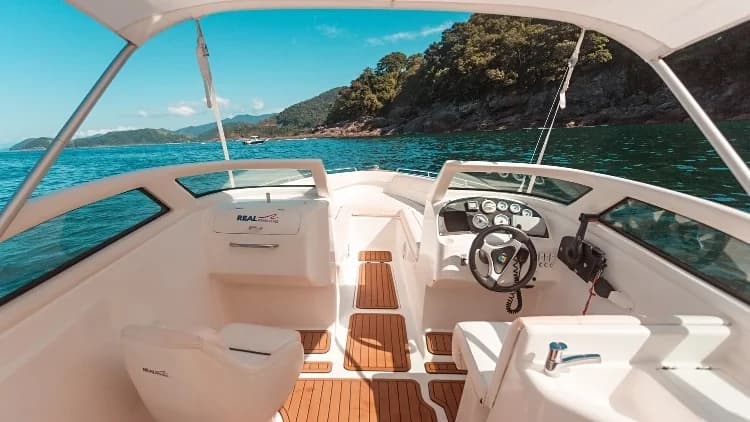
Where you sit onboard makes a difference. The NHS recommends sitting in the middle of the boat, where the motion is smaller. The MSD Manual talks about staying in the points of least motion, in the middle of the boat and close to water level (MSD Manual). And the CDC advises avoiding the spots that rock the most, such as the bow, the front of the boat (CDC Yellow Book).
On a speedboat, that means preferring the middle seats over the front end. It's worth agreeing on this with the group right at boarding, before everyone settles in.
Where should you look and what should you avoid while underway?
- Look at a fixed point, such as the horizon. This is the guidance common to all the sources consulted.
- Don't read or use your phone or other screens while the boat is moving.
- Don't keep watching moving objects, such as the waves.
- Breathe fresh air. When discomfort starts, closing your eyes and breathing slowly helps.
- Move your head as little as possible and let your body follow the boat's motion.
The CDC notes that repeated exposure, called habituation, is the most effective measure: people who go out on the water often tend to feel the motion less over time. For anyone heading to sea for the first time, that's one more reason to start with a short tour.
What should you eat and drink before the tour?
A full stomach and alcohol work against you. The NHS recommends avoiding heavy meals, spicy food, and alcohol before and during the trip, and the MSD Manual notes that alcohol and overeating increase the chance of getting sick. Hospital Sírio-Libanês sums it up the same way: eat little beforehand and don't drink alcohol (Hospital Sírio-Libanês).
Since food and drinks aren't included on the boat tours, the tip is to bring water and a light snack. The list of what to pack is in what to bring for a boat tour, hike, and rappelling.

Can you take motion-sickness medication before the tour?
Medication for motion sickness exists, but the choice shouldn't be made on your own. The CDC says these medications work best when taken before exposure to motion, and that it's up to a health professional to advise which one to use and when. The NHS notes that a pharmacist can advise on the options, and Hospital Sírio-Libanês says medication should only be used with a medical prescription.
Children, pregnant women, and older adults deserve extra care: the MSD Manual lists specific medication restrictions for these groups, so medical guidance is essential. It's best to talk to a doctor or pharmacist before the trip, not on the morning of the tour.
Which tour should you choose if you tend to get seasick?
Duration matters. The 3 Islands routes, by Ilha das Couves, Ilha dos Gatos, and As Ilhas, last about 3 hours, with two stops for swimming; the Montão de Trigo route takes about 4 hours, and the Ilhabela route, about 6. For anyone who has never been on a speedboat or knows they get seasick, starting with the shortest one is a way to test it out.
The shared boat tour to the 3 Islands of the South Coast leaves from Praia de Boiçucanga at 9 am, 12 pm, and 3 pm and costs R$ 200 per person (reference price from September 2026; the current price is on the tour's page). On the private boat, the group chooses the time and has the boat to themselves; the post shared or private tour compares the two options.
Sea conditions also matter. The tours depend on safe navigation conditions, and the tide table for São Sebastião shows where to track tides and the Navy's bad-weather warnings. If a departure is canceled due to weather or maritime safety, the traveler can choose between rescheduling at no cost and getting a full refund.

What should you do if seasickness starts onboard?
- Let the sailor or someone with the group know.
- Move to the middle of the boat, close to water level, and look at the horizon.
- Put your phone away, breathe fresh air, close your eyes, and breathe slowly.
- Avoid eating more and don't drink alcohol until the discomfort passes.
If the discomfort is severe or doesn't go away after getting off the boat, seek medical care. On the South Coast, Hospital de Clínicas da Costa Sul, in Boiçucanga, has a 24-hour emergency room, according to the São Sebastião city government, and SAMU (the emergency medical service) can be reached at 192. Other contacts are in the post on emergencies and healthcare in Maresias.
Frequently asked questions
- What's the best spot on the boat for someone who gets seasick?
- The middle of the boat, close to water level, where the motion is smaller, according to the NHS and the MSD Manual. The CDC advises avoiding the bow, the front of the boat, which rocks more.
- Can I take medication for seasickness before the boat tour?
- Only with guidance from a doctor or pharmacist. The CDC explains that the medications work best when taken before boarding, and that the professional decides which one and when; for children, pregnant women, and older adults, medical guidance is essential.
- What should you eat before a boat tour?
- A light meal. Health sources recommend avoiding heavy meals, spicy food, and alcohol before and during the trip.
- Can a child who gets seasick go on a boat tour?
- The same care about seating and looking at the horizon applies to them too, and a short route, about 3 hours, is the best way to start. Medication for children has restrictions and should only be used with a pediatrician's guidance.
- Where can you get medical care if the seasickness doesn't go away?
- On São Sebastião's South Coast, Hospital de Clínicas da Costa Sul, in Boiçucanga, has a 24-hour emergency room. In an emergency, call 192 for SAMU.