Atlantic Forest in Maresias: What to Look for on the Trails
By MaresiasTur · · 5 min read
Quick answer
The Atlantic Forest in Maresias covers the hills surrounding the beach and shows up close on the trails to Cachoeira das 7 Quedas, the Trilha dos Mirantes, and on the way to Praia de Calhetas. Along them, it's worth noticing bromeliads, palm trees, waterfalls, and birdsong.

The green hills framing the beach aren't just scenery — they're forest. The Atlantic Forest in Maresias descends from the Serra do Mar down to the rocky shore, and the São Sebastião Unit of the Serra do Mar State Park covers about 70% of the municipality.
On the region's guided trails, travelers pass through preserved forest, cross rivers, and reach waterfalls and coves. This guide shows where to see the forest up close, what to notice along the way, and how to walk without leaving a trace.
Where to see the Atlantic Forest up close in Maresias?
| Tour | Where the forest appears |
|---|---|
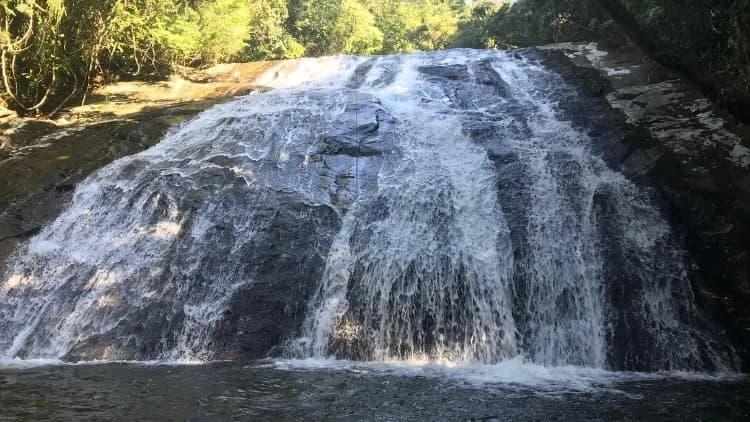
| Eco Hike – Maresias Waterfall (7 Quedas) | 2 km round trip, through preserved Atlantic Forest and a conservation unit, ending at a waterfall |
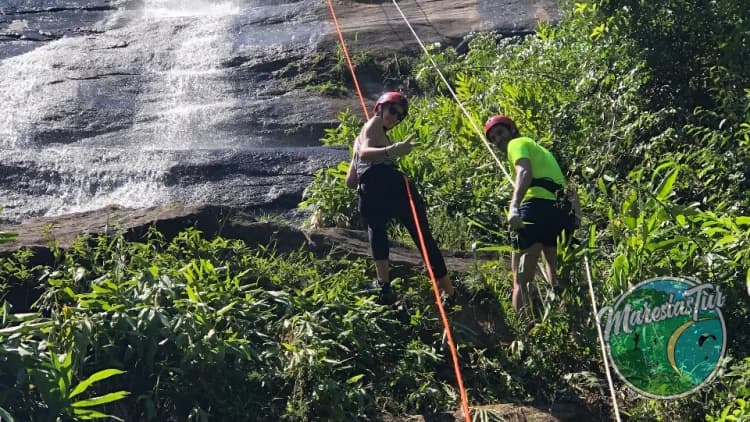
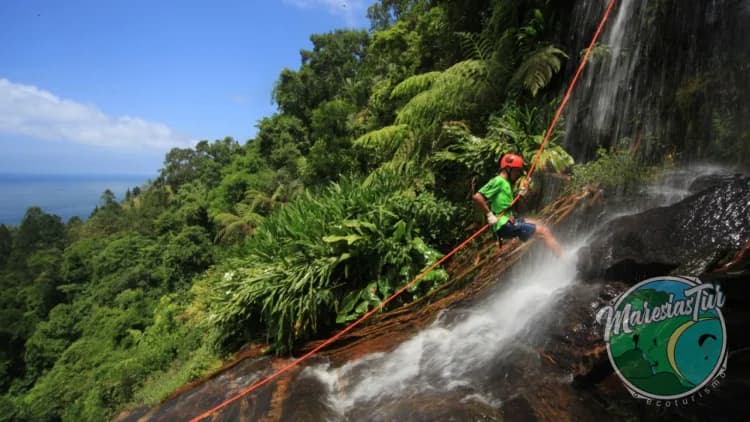
| Trilha dos Mirantes (Lookout Rappelling) | 2 km between Paúba and Maresias, with a view of the sea and the forest-covered hills |
| EcoTour – Calhetas Beach | A cove with a rocky headland, coconut palms, and a forest-covered hill |
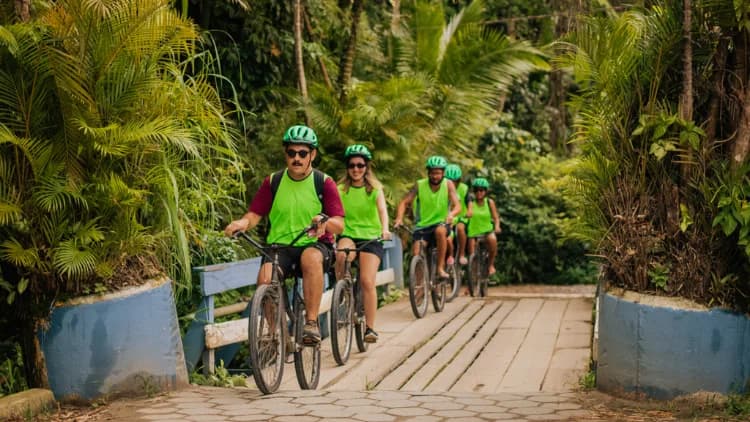
| BikeTour 360º | A stretch of trail leading to Poço do Caetano, on the Rio Maresias |
The 7 Quedas trail is the most immersive: the tour includes an educational immersion about the Atlantic Forest with a certified ecotourism guide. The details are in the post about the Cachoeira das 7 Quedas trail.
What to look for on the trails?
- Understory plants. Along the dirt path to Praia de Calhetas, bromeliads and palm trees grow on both sides of the trail.
- Water. Crystal-clear rivers, like the Rio Maresias, and waterfalls that flow down dark rock, surrounded by moss.
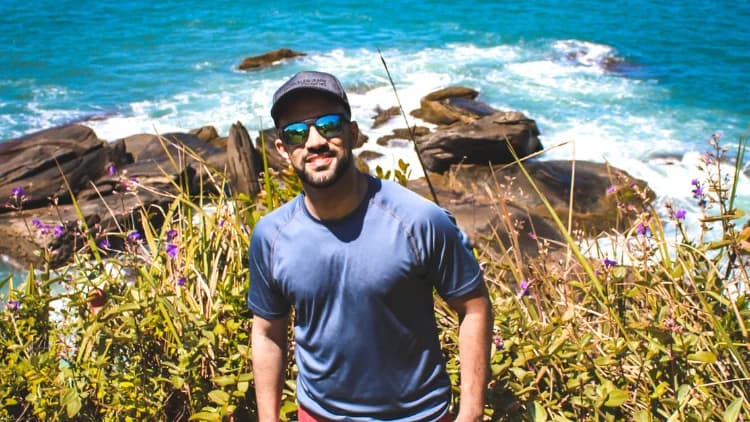
- The headland. On the trails by the sea, the forest ends in rocks, grass, and flowers, right next to the waves.
- Sounds of the forest. It's worth stopping, looking up into the treetops now and then, and paying attention to the birdsong.
One documented example of flora near Maresias: in the survey from the Management Plan of the APA Marinha do Litoral Norte, Ilha das Couves in São Sebastião recorded bromeliads, the most common being Nidularium innocentii, along with Clusia criuva, jerivá palm, and the juçara palm, a species threatened with extinction.
What animals live in the Serra do Mar?
The Management Plan of the Serra do Mar State Park, cited by the ipatrimônio portal, records in the entire park 373 bird species, 111 mammal species, 144 amphibian species, and 46 reptile species. Four of the park's five primate species are endemic to the Atlantic Forest and threatened: the black-tufted marmoset (sagui-da-serra-escuro), the buffy-tufted-ear marmoset (sauá), the brown howler monkey (bugio), and the muriqui. Notable threatened birds include the red-tailed amazon (papagaio-chauá), the rufous-brown solitaire (sabiacica), the black-hooded antwren (pararu), and the buff-throated purpletuft (pixoxó).
These figures apply to the entire park, which extends far beyond São Sebastião, and no trail guarantees an animal sighting. The best chance is to walk quietly, stop now and then, and pay attention to the sounds. The post about the Serra do Mar State Park in São Sebastião explains what the park protects and how to visit the official trails.
Why is the juçara palm so important?
The juçara palm (Euterpe edulis) is named in the park's management plan as the most threatened plant species. Its seeds feed more than 70 species of birds, rodents, and primates, especially the black-fronted piping guan (jacutinga), and the species is critically endangered in the State of São Paulo. When the palm disappears, the forest loses food for much of its fauna.
Fundação Florestal runs the Juçara Program, featured on the Fundação Florestal institutional website. For the traveler, the approach is simple: don't buy heart of palm from an unknown source, and don't pull up seedlings or seeds on the trail.
How to walk in the forest without leaving a trace?
- Stay on the trail and follow the guide's instructions; shortcuts cause erosion.
- Don't take plants, flowers, seeds, or rocks.
- Don't feed the animals.
- Speak quietly: besides respecting the wildlife, it raises the chance of hearing the birds.
- Take all your trash back with you, including fruit scraps.
MaresiasTur partners with the E-LIXO program, run by the São Sebastião city government, which exchanges electronic waste for native Atlantic Forest seedlings, and has already planted more than 2,000 seedlings. The story is in the post about sustainability, native seedlings, and e-waste. For what to pack in your bag, see what to bring for a boat tour, hike, or rappel.
Which tour should you choose to experience the forest?
For those who want forest, beach, and little effort, EcoTour – Calhetas Beach is the most relaxed option: round-trip transportation leaving from the agency, at Av. Francisco Loup, 500, a certified local guide, and about 3 hours on an almost deserted beach of white sand and rock formations, with departures at 9 a.m. and 2 p.m. It costs R$ 150 per person (reference price as of September 2026); the updated price is on the EcoTour – Calhetas Beach page, and the itinerary is in the post about EcoTour in Calhetas.
For an immersion in the forest, the 7 Quedas trail costs R$ 70 per person (same reference). And the other options, from easy level to rappelling, are in the guide to hiking trails in Maresias.
Frequently asked questions
- Where can you see the Atlantic Forest in Maresias?
- On the guided trails to Cachoeira das 7 Quedas and the Trilha dos Mirantes, on the way to Praia de Calhetas, and on the trail section of the BikeTour to Poço do Caetano.
- Can you see monkeys on the trails in Maresias?
- The Serra do Mar State Park records primates such as the brown howler monkey, the sauá marmoset, and the muriqui, but no trail guarantees a sighting. Walking quietly increases the chance of hearing and seeing animals.
- Why is the juçara palm threatened?
- It's the most threatened plant species in the Serra do Mar State Park and is critically endangered in São Paulo. Its seeds feed more than 70 species of birds, rodents, and primates.
- What's the most relaxed tour to experience the forest in Maresias?
- EcoTour – Calhetas Beach, with transportation leaving from the agency, a certified local guide, and about 3 hours of touring, recommended for couples and families.
- How much does EcoTour – Calhetas Beach cost?
- R$ 150 per person (reference price as of September 2026; the updated price appears on the tour page).